A Capsules essay
Taste Is the Scarce Skill of the AI Era.
AI can generate more than any person could meaningfully use. The creative advantage now belongs to those who know what to choose, what to reject, and what deserves to become real.
01 · The new bottleneck
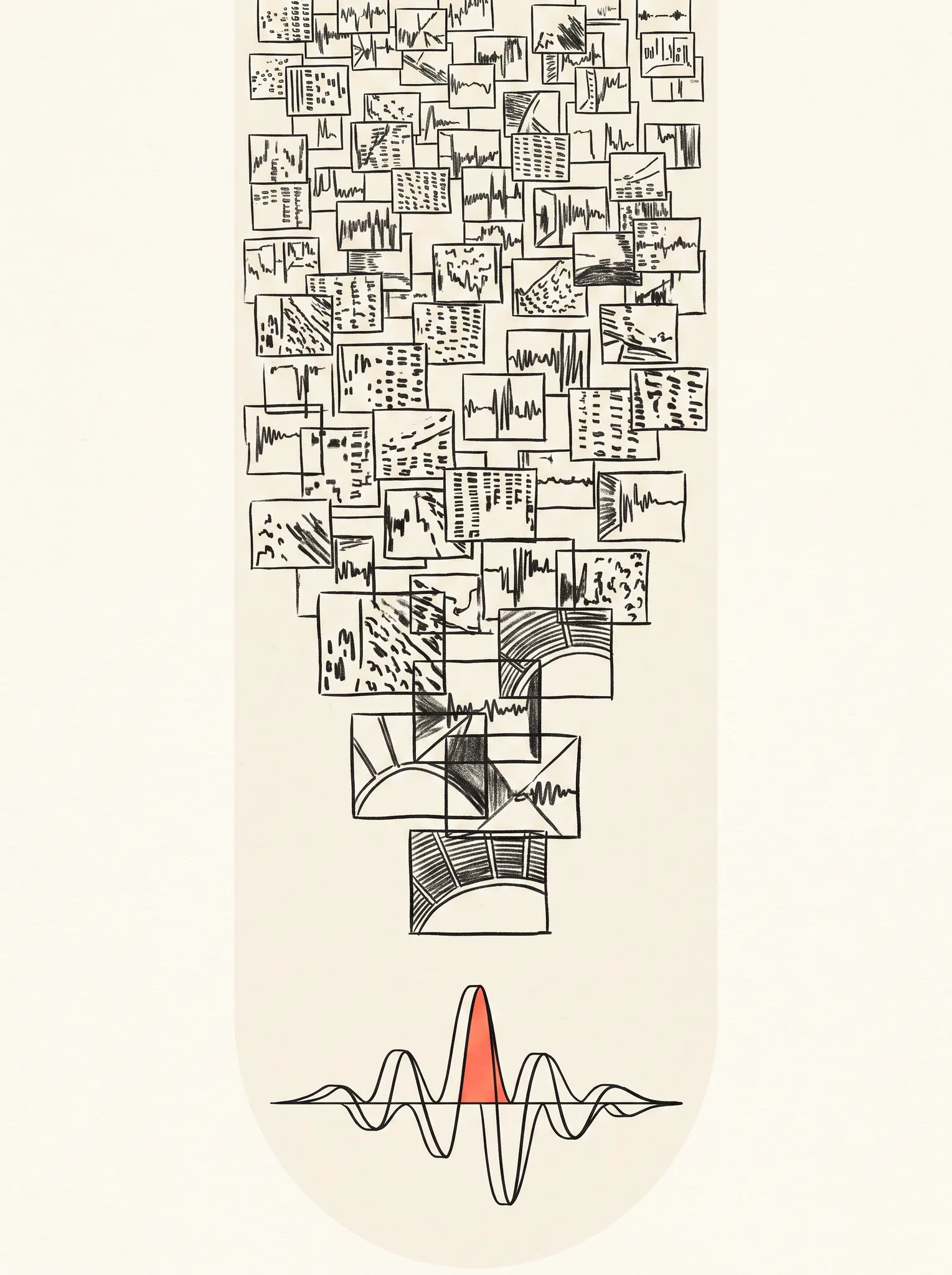
We solved the blank page. We created a different problem.
For most of creative history, making was expensive.
An image required a camera, a studio, a subject, or years of practice. A film required equipment and a crew. A designed digital experience required specialists who could write, compose, animate, and build.
Generative AI has changed that equation. It can produce drafts, variations, images, voices, motion, and working code at a speed that would have felt impossible a few years ago.
This is real creative leverage. It gives more people access to materials and capabilities that were previously difficult, costly, or out of reach.
But abundance does not remove the need for creativity. It moves the bottleneck.
The problem is no longer whether you can produce another option. The problem is whether you can recognize the right one—and whether you can shape it into something coherent enough to mean anything.
02 · Convergence
More output is not the same as more difference.
A 2024 experiment published in Science Advances captured the tension clearly. Writers who received story ideas from generative AI produced work that readers rated as more creative, better written, and more enjoyable, with the strongest gains among participants who began with lower creativity scores.
But the AI-assisted stories also became more similar to one another.
Individual output improved. Collective novelty narrowed.
That is not a reason to reject the tools. It is a reason to understand what the tools make scarce.
When anyone can generate hundreds of plausible directions, plausibility stops being the standard. Fluency is no longer enough. A polished paragraph or convincing composition may be technically successful and still feel interchangeable.
The scarce part is the point of view that refuses interchangeability.
Source · Science Advances
Taste is not decoration
Judgment exercised under abundance.
Taste is often treated as a finishing layer—the font, the palette, the thing that makes an otherwise complete object feel expensive. That definition is too small.
This belongs.
That does not.
This idea has life.
That one is merely competent.
This image carries the story.
That one only matches the prompt.
This detail creates tension.
That one creates noise.
This is finished.
This still needs to be re-authored.
Taste includes reference, sensitivity, pattern recognition, cultural awareness, and craft. But it also includes refusal. People with taste do not simply recognize good material. They are willing to remove material that weakens the whole, even when producing it was effortless.
03 · Agency
The human role is changing, not disappearing.
The most useful framing for creative AI is not a contest between human and machine. It is a redistribution of creative labor.
Some technical tasks become easier. The person gains access to more material, more quickly. In return, more responsibility moves into direction, critique, refinement, and the final decision.
Recent research into AI-assisted design describes both sides of this shift. Generative tools can reduce workload and make ideation feel easier, while weakly directed use can reduce expressive control, personal style, and the creator’s sense of authorship.
Other researchers have proposed treating generative AI as an active creative medium: something a person shapes, observes, disrupts, and selects from rather than a machine that hands over a finished answer.
The distinction is agency.
A human-led process does not require pretending AI was absent. It requires that a person remains responsible for the intent, the choices, and the final form.
04 · Form
Constraints give taste something to work against.
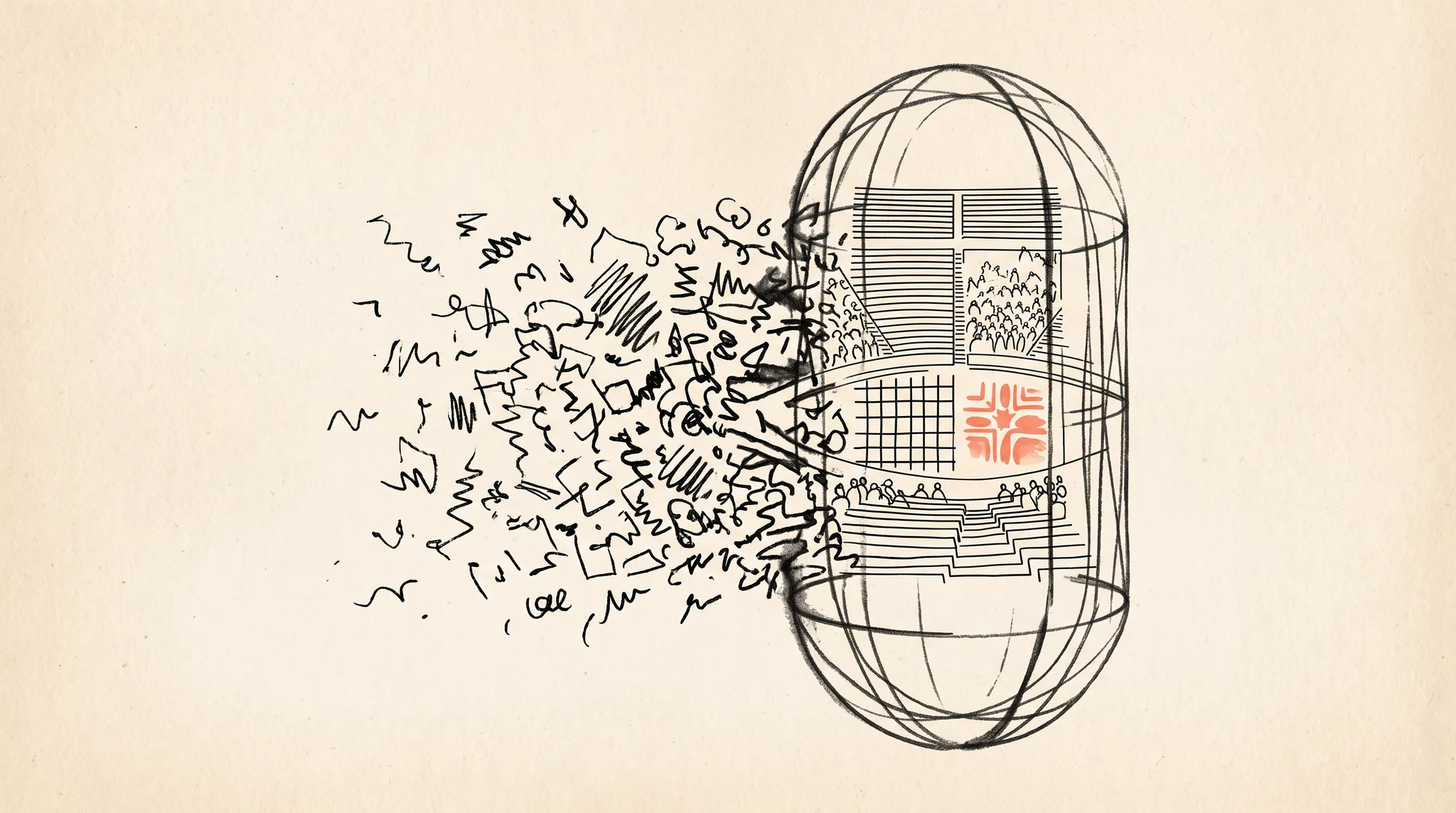
The blank prompt looks like freedom: make anything.
In practice, infinite possibility can produce generic decisions. Without a form, every direction competes with every other direction. The creator spends energy opening possibilities but has no structure for resolving them.
Good constraints do not merely block. They focus.
Creativity research distinguishes constraints that only exclude from constraints that direct attention toward useful materials, actions, or goals. A sonnet, a stage, a character limit, a camera frame, or a publishing format can narrow the field while intensifying the decisions inside it.
Source · Creativity from constraints
The right limitation turns an ocean into a place where you can stand.
05 · Curation
Curation is craft.
The word “curation” has been weakened by overuse. It can mean little more than collecting attractive things.
Real curation is harder.
It asks a person to understand the relationship between pieces. To build sequence, tension, contrast, and meaning. To know whether a surprising element creates energy or breaks the world. To make a hundred small decisions that the audience experiences as one coherent feeling.
This is authorship, even when the raw materials were generated.
The question is whether anyone cared enough to shape the work into something specific.
That is the cultural opportunity in front of us: to recognize curation not as an administrative layer after creation, but as a creative discipline in its own right.
Where stories live
Generation gives us possibilities. Taste gives them a reason to exist.
Capsules was built inside this tension.
We are not interested in pretending AI is outside the process. We are equally uninterested in surrendering the story to whatever a model produces first.
Capsules is a new publishing format for living, scroll-driven, interactive stories. It gives people a form for combining writing, imagery, motion, and interaction into one experience—human-led, AI-assisted, and shaped by the creator’s taste.
Our bet is simple: in an era of infinite output, people will value work that feels chosen. They will notice when someone cared.